
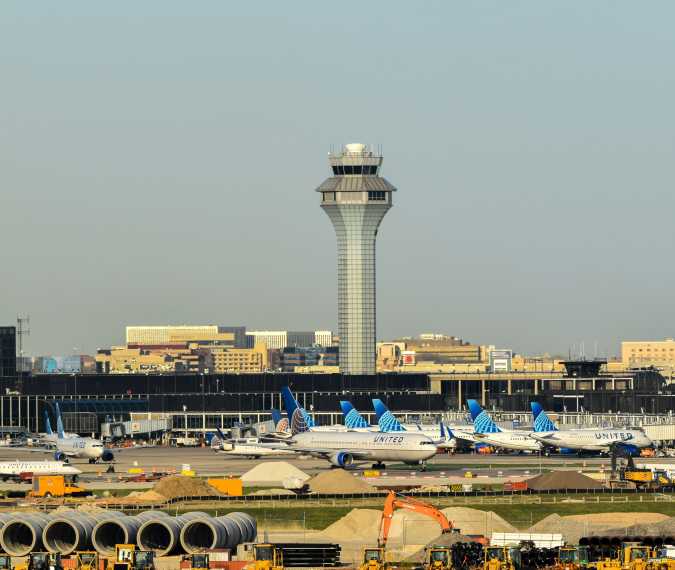
A Major U.S. Airport Is Being Forced to Cut Hundreds of Flights This Summer
Travelers planning to pass through Chicago O’Hare International Airport this summer may notice fewer flight options, as federal regulators move to ease congestion at one of the busiest airports in the United States.
A new directive from the Federal Aviation Administration (FAA) will limit the total number of daily takeoffs and landings at O’Hare to 2,708. That’s a significant drop from the roughly 3,080 flights airlines had initially scheduled for the peak travel season.
Why are flights being reduced
The decision comes as officials try to prevent the widespread delays that have become common during busy travel periods. O’Hare plays a crucial role in the national aviation network, serving as a major hub for both United Airlines and American Airlines.
However, the airport is currently dealing with multiple operational challenges. These include air traffic control staffing shortages, ongoing construction projects, and the complexity of managing its intersecting runway system. Together, these factors make it difficult to handle the high number of flights airlines had planned.
FAA Administrator Bryan Bedford emphasized that safety remains the top priority, noting that airline schedules must align with what the system can realistically manage.
When the changes take effect
Although the restrictions were initially set to begin in mid-May, the timeline has been adjusted. The new limits will now apply from June 2 through October 24, 2026. This delay gives airlines time to reorganize schedules, especially since many crew assignments for the summer had already been finalized.
A busy summer with fewer flights
Summer is typically the busiest time of year for air travel, and airlines had planned to expand service by about 15% compared to last year. But even before this increase, O’Hare was struggling to keep up—last summer, fewer than 60% of flights departed on time.
According to Sean Duffy, the new cap is designed to create a smoother travel experience by reducing the likelihood of last-minute cancellations and long delays.
The staffing challenge behind the scenes
One of the biggest issues affecting operations is the shortage of air traffic controllers. The FAA is still rebuilding its workforce after pandemic-related disruptions, including early retirements and paused training programs.
Training new controllers isn’t a quick fix—it involves extensive screening, academy instruction, and years of hands-on experience before they can work independently. Until staffing levels improve, airports like O’Hare will continue to face capacity limits.
What travelers should expect
Instead of canceling flights at the last minute, airlines are expected to adjust their schedules in advance. This could mean:
Fewer daily departures on certain routes
Using larger aircraft to carry more passengers per flight
Temporarily suspending some routes altogether
Because O’Hare is such a major hub, these changes could affect travel plans across the country—not just in Chicago.
The upside: fewer delays
While fewer flights might seem inconvenient, the goal is to improve reliability. By aligning schedules with what the airport can realistically handle, the FAA hopes to reduce the domino effect of delays that often disrupt entire travel networks.
As of now, airlines have not yet announced exactly which flights will be affected. However, updates are expected soon as carriers finalize their revised schedules.